Tone Correction Mode
Tone Correction mode is used for adjusting the image brightness in light and dark areas. As a result the overall impression of the image improves considerably. Changes can be made to the entire image or to a part of the photo depending on the colors selected for correction.
To process an image in Tone Correction mode, follow these steps:
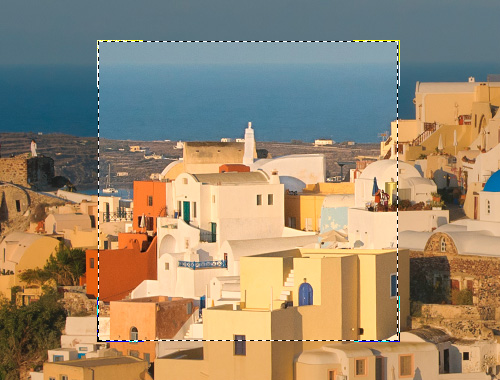
- Step 1. Once this mode is selected the Quick Preview will appear. It is a square area outlined with the "marching ants". This lets you quickly preview the result in different areas of the image. You can move it to any part of the image - drag and drop or double click. To compare the result with the original picture, click and keep mouse pressed within the preview area.
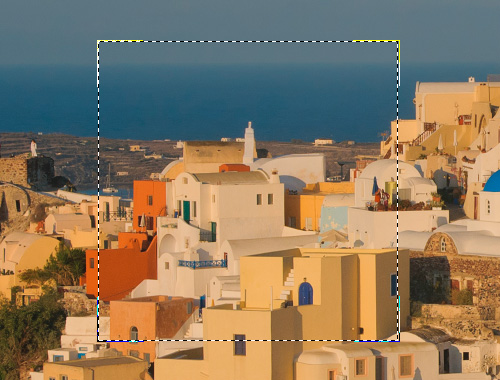
You can change the preview area size in the program's preferences.
- Step 2. You can choose the colors to be corrected. To do this use the Color Sets.
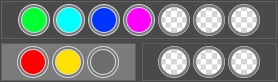
The original set consists of seven colors. There are two additional sets below it, each consisting of three cells. Move colors from the main set into lower cells. By dragging colors you can have from one to three sets of colors. With a mouse click switch from one color set to another. The chosen set is highlighted with a white background.
The Color Indicator makes it easier to form a color set.

When you move the cursor over the image, this line displays the color components in the corresponding point. This helps to select colors more precisely, to edit the certain area.
- Step 3. Adjust the parameters separately for each Color Set.
The selected set has a white background. Change the parameters for it:
Radius (1-60). This parameter determines the area to be analyzed by the algorithm. After analysis, new color and brightness information is assigned to the point, to attribute it to one of the color sets, that is used for futher processing.
Shadows (0-100). The default value of this parameter is 0 and dark areas are not corrected. As the parameter's value is increased, dark areas become lighter, and details there become more discernible. Objects in dark silhouettes become more like they were when photographed.
Highlights (0-100). The default value of this parameter is 0 and light areas are not corrected. As the value of the parameter is increased, light areas become darker, contrast increases, and objects stand out more while the picture overall has more volume and appears more accurate.
Note: If color components do not belong to the same set, the application of the parameters is mixed. For example, if red and yellow there are in different sets, the correction of orange will be performed within both color sets.
- Step 4. To process the image press the
 button.
Enhancer v. 17.8 - Free 10-day Trial
