The History of Photography: Development of Photography
A considerable contribution to photo technique were made by such scientists as Frenchmen A. Fizeau, A. Claudet, the Hungarian J. Petzval, the Russian A. Grekov, the American S. Morse, and many others.
The Daguerrotypy period did not last long. The silver plate image was expensive, mirror-like, had a single copy only, and was difficult to view due to its glitter.
The Calotype method had more advantages and therefore was further developed. By the end of the 1840s an inventor out of the Niépce family, Niépce de Saint-Victor, changed the paper negative for a piece of glass covered with starch glue and a layer of egg whites. The layer was made photosensitive by silver salts.
In 1851 an Englishman S. Archer covered the glass with collodion. Positives started to be printed on albumin paper. Photos could be duplicated.
In another couple of decades Richard Maddox proposed a shot on dry bromine-gelatin plates. This improvement made photography closer to the modern version.
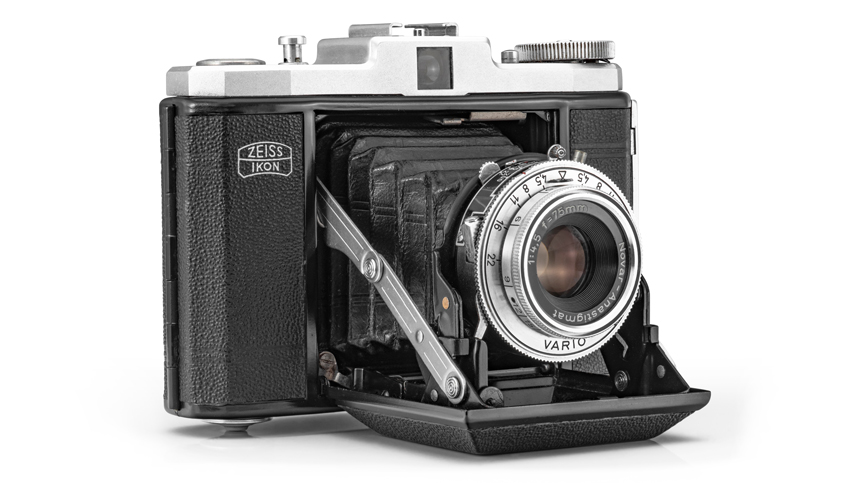
In 1873 H..Vogel manufactured orthochromatic plates. Later on an anastigmatic lens was designed. In 1889 D. Eastman (the founder of Kodak) started the production of celluloid film. In 1904 the first color photography plates were produced by the Lumiere firm.
The photography of our day is a science of itself and an art, analysis and documentation methods, artistic vocation, and different kinds of applied activity.