Suppress Noise on a Rendered Image あいにく, このページは英語にだけ使用可能です。日本語のバージョンは遠からず出ります。 Attention!
You can get a free licence for an AKVIS program by translating texts from English to Japanese.
Please contact us at team@akvis.com.
The author of the design project is Innokenti Chtchavrovski.
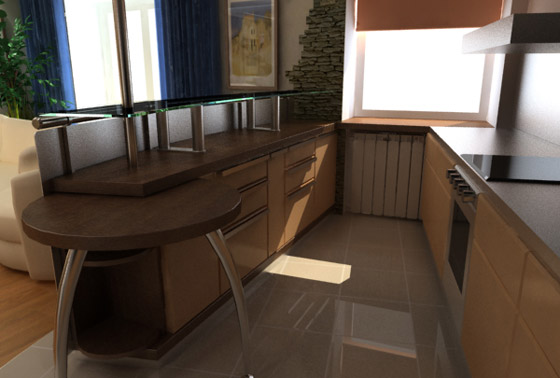
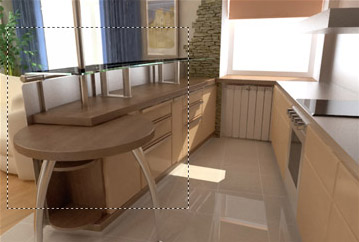
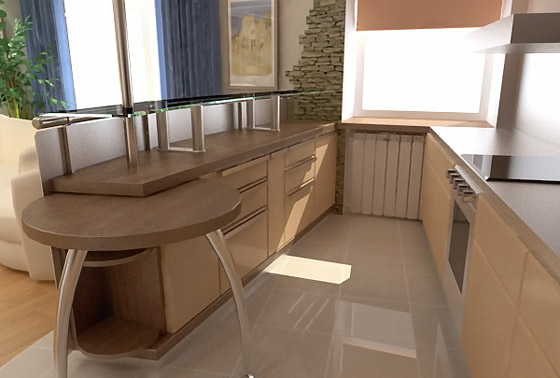
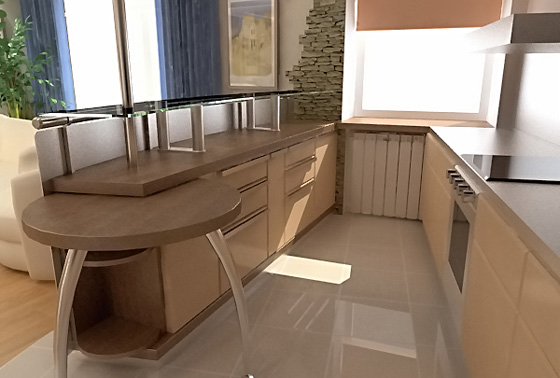
The picture below is the result of rendering a 3D interior design model in 3DS MAX.
Rendering is a complex process of transforming a 3D vector model into a 2D bitmap image taking into account the visual angle, illumination, materials, texture overlay, etc.
Everyone engaged in the creation of interior design models knows that a quality rendering requires a lot of time and resources; it may take hours and hours.
And what if the customer is already on the doorstep and you do not have time for a high quality rendering?
The only way out is to render the picture with the average settings and then process the image in a photo editor, for example in Adobe Photoshop. It will save you time.
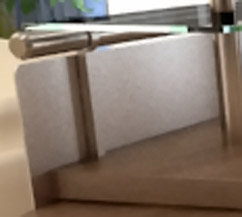
The image above has been rendered with the average settings and in a relatively short period of time. But this affected the quality of the result: you can see noise in shadows and on the metal surface of the bar.
Open the image in Adobe Photoshop (or any other photo editor) and apply the initial correction with the tools Levels and Color Balance.
Now comes the noise correction. We will apply the AKVIS Noise Buster plug-in compatible not only with Adobe Photoshop, but with many other photo editors as well (consult the Compatibility page).
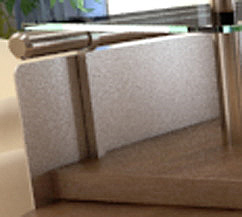
On the metal surface of the bar the noise is especially pronounced.
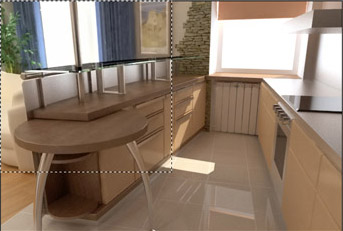
Call the AKVIS Noise Buster plug-in. Do not complicate the task, just use the Auto Filtering preset.
The program will analyse the image, estimate the level of noise and offer its noise reduction settings.
The result will be shown in the preview area in the After tab.
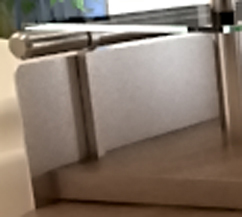
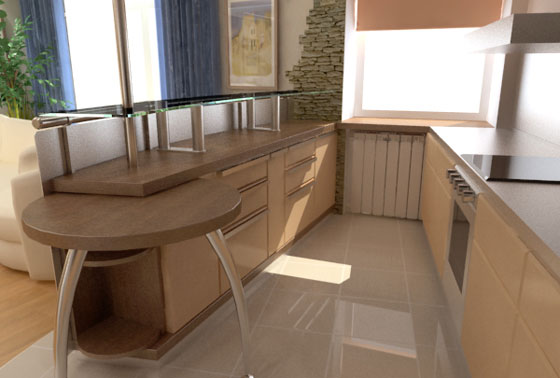
The result of the automatic filtration is good: now there is much less noise.
|
|
| Before the noise reduction |
After the noise reduction |
There is no need in removing the noise completely; the main idea is to improve the overall impression from the image. The image filtered with the automatic settings is good enough to be shown to the customer.
If necessary, you can adjust the parameters manually. The method is intuitive — if you notice that the small details (the wood texture, for instance) disappear with the noise, drag the sliders to the left. If you want a smoother picture drag the sliders to the right. Read the hints in the lower part of the Settings panel to understand the effect of every parameter.
The adjustment will take no more than 5 minutes. The result is a noise-free picture.
Now we will filter the whole image with the chosen settings. Maybe the final image is not very realistic, but it pleases the eye.
Afterword:
Nevertheless, the author took the "auto filtering" image to the customer. It's only a matter of taste though.
|