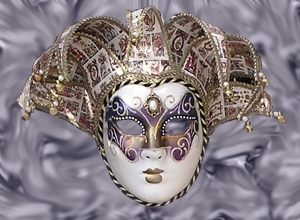
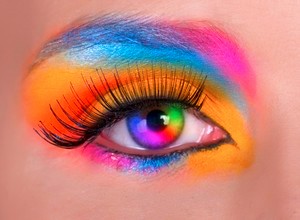
The Saturation Tool in AKVIS MultiBrush


Please enter your email to be kept posted on updates and discounts:
 
 
  Products     Download     Online Store     Tutorial     Support     Company      Customer Room
en  fr  de  es  pt  it  jp  ru    
 

Tutorial: AKVIS MultiBrush

Saturation


The Saturation tool tones an image by changing the saturation and contrast of neighboring pixels. The tool works in two modes: in Saturate mode colors become more saturated, in Desaturate mode colors become less saturated. To quickly access this tool and switch between the Lighten, Darken, and Saturation tools press L.
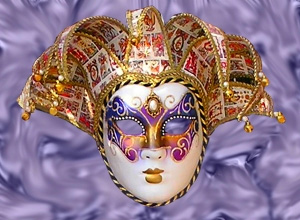
    Saturate Mode Desaturate Mode
    Saturate Mode Desaturate Mode


The tool's parameters will be shown in a floating box over an image (by right-clicking the mouse) and also in the Settings Panel (only if this option is selected in Preferences).

To change a parameter, enter a numerical value in the parameter's field and press Enter (Macintosh: Return) or adjust the slider.

  • Diameter (1-500). Size of the Saturation tool.
  • Hardness (0-100). The softness of the tool's edge, where the effect is applied partially. At higher values the boundary between treated and untreated areas is more distinct; at lower values the transition between these areas is processed more smoothly.

    Influence of a Hard Brush Edge on a Rainbow
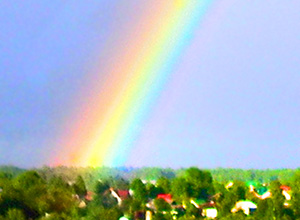
    Soft Brush Edge Hard Brush Edge
    Hardness = 10% Hardness = 85%

  • Strength (1-100). The strength of the effect. The higher the value, the stronger the change.

    Changing the Colors of Flowers (decoupage by Irene Briz)
    Low Strength High Strength
    Strength = 10% Strength = 80%

To change saturation in a straight line, pick a starting point by left-clicking the mouse, then, while pressing Shift, move the cursor to the desired end point and release Shift. If Shift is not released, then a new line will be drawn to each point where the mouse is clicked.

 
How It Works How It Works
   — Workspace — Workspace
   — How To Use The Program — How To Use The Program
   — Create New Image — Create New Image
   — Preferences — Preferences
   — Hot Keys — Hot Keys
Palettes Palettes
   — Toolbar — Toolbar
   — Color — Color
   — Swatches — Swatches
   — History — History
   — Layers — Layers
   — Channels — Channels
Standard Brushes Standard Brushes
   — Color Brush — Color Brush
   — Color Pencil — Color Pencil
   — Spray — Spray
   — Eraser — Eraser
   — History Brush — History Brush
   — Clone Stamp — Clone Stamp
   — Chameleon Brush — Chameleon Brush
   — Blur — Blur
   — Sharpen — Sharpen
   — Smudge — Smudge
   — Lighten — Lighten
   — Darken — Darken
   — Saturation — Saturation
Artistic Brushes Artistic Brushes
   — Oil Brush — Oil Brush
   — Roller — Roller
   — Felt-tip Marker — Felt-tip Marker
   — Chalk — Chalk
   — Artistic Pencil — Artistic Pencil
   — Artistic Spray — Artistic Spray
   — Artistic Eraser — Artistic Eraser
Additional Tools Additional Tools
   — Eyedropper — Eyedropper
   — Hand — Hand
   — Zoom — Zoom
Examples Examples
   — Changing Eye Color — Changing Eye Color
   — Selecting Lipstick — Selecting Lipstick
   — How To Enliven the Color of a Face — How To Enliven the Color of a Face
   — Figure Correction — Figure Correction
   — Portrait Editing — Portrait Editing
   — Odd Man Out — Odd Man Out
   — Alter Ego — Alter Ego
   — Removing Facial Shine — Removing Facial Shine
   — Photo Retouching — Photo Retouching
   — Removing an Object — Removing an Object
   — Visiting a Wildlife Park — Visiting a Wildlife Park


back to top


   Privacy Policy | Site Map | Search at AKVIS    
   Contact Us | Twitter | Facebook | YouTube Channel    
| English  |Français  |Deutsch  |Español  |Português  |Italiano  |日本語  |Pусский  | © 2004-2012 AKVIS. All rights reserved.